
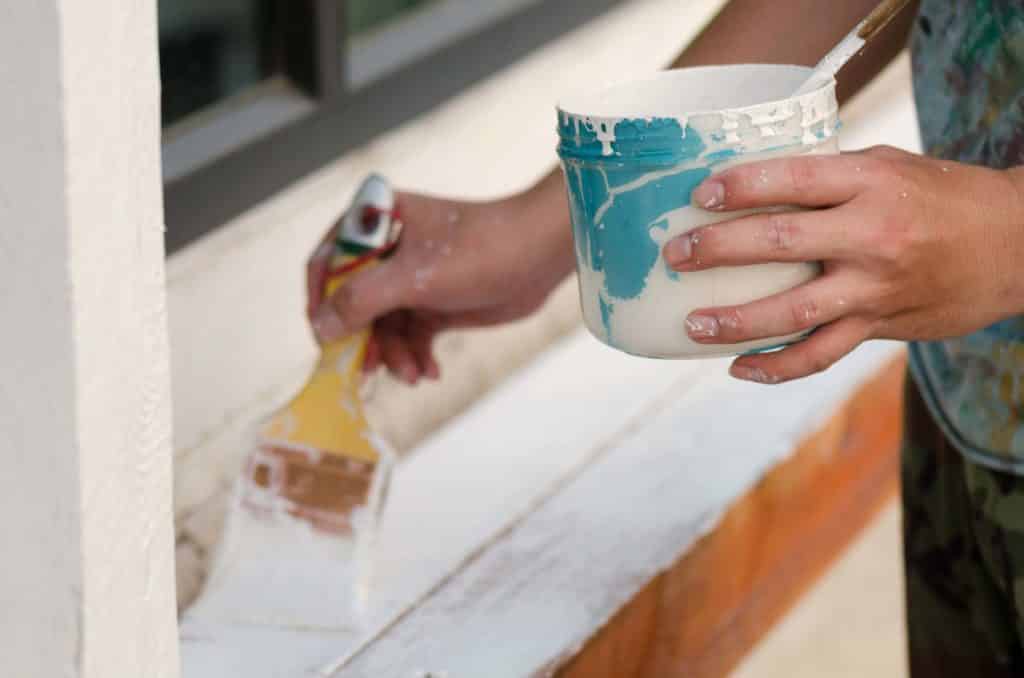
Painting wood siding on an older New Orleans home is mostly a prep job. The paint itself only lasts if the wood under it is sound, dry and properly primed, and on houses this age that means checking for rot, fixing water problems and handling old paint safely before a brush touches the wall.
Done right, a good paint job protects the wood for years and keeps the house looking the way it was built to look. This guide covers the order of work, the primer and paint choices, and what the city’s historic guidelines say. If you’d like a crew to handle it, the TurnKey Painter team paints older homes across the area, and you can request a free estimate or call (504) 608-5528.
Key takeaways
- Paint is a temporary barrier; the city’s historic guidelines suggest repainting exterior surfaces every 5 to 8 years.
- Find and fix moisture sources first, since a lot of paint failure starts at gutters, sills and ground contact.
- Homes built before 1978 fall under the EPA’s lead-safe rule for paid work that disturbs paint.
- Use a compatible primer and paint, and put two topcoats over bare or repaired wood.
- Painting usually costs far less than replacing wood siding, based on HomeGuide’s national cost ranges.
Why older wood siding needs a careful approach
The New Orleans Historic District Landmarks Commission’s Guidelines for Exterior Woodwork describe paint as a protective layer that limits moisture and sun damage. They also say it has to be viewed as a temporary barrier that breaks down through temperature and humidity changes and needs to be reapplied.
Older siding often looks worse than it is. The HDLC guidelines note that the actual condition of unmaintained exterior wood is generally better than its appearance, and that selective repair plus regular maintenance is usually all that’s needed rather than full replacement.
That’s good news for your budget, but it puts the weight on diagnosis. The steps below follow the order the HDLC recommends for repainting.
Step 1: Decide whether it needs full repainting
The HDLC’s first step is to decide whether a full repaint is needed, or whether cleaning and spot painting will do. It warns that painting more often than necessary builds up layers and increases the chance of future paint failure.
Washing is the quick test. The guidelines suggest a mild detergent solution and a natural bristle brush to freshen the surface and see what condition the paint is really in.
Step 2: Read the paint failures
Each type of failure points to a cause. The HDLC guidelines describe them this way:
- Peeling: painting in bad conditions, poor surface prep or moisture getting in
- Blistering: cut into a blister; if you see bare wood, the cause is likely moisture, and if you see paint, it was probably painted in hot direct sun
- Cracking or crazing: usually a hard film that doesn’t move with the wood underneath
- Alligatoring: severe cracking and crazing across the surface
Sherwin-Williams’ exterior troubleshooting guide describes the same moisture problem from the paint side: moisture drawn to the surface by the sun’s heat breaks the bond between the wood and the paint, causing blisters and peeling.
Step 3: Fix the causes, including rot
The HDLC says a substantial amount of paint failure comes from moisture near a roofline, gutter, downspout or the ground, at horizontal surfaces like window sills and stoops, and from moisture moving out through walls of kitchens, bathrooms and laundry rooms. Eliminate the water source, then repair the damaged wood.
A simple rot check
The HDLC guidelines describe testing suspect wood by pushing an awl or ice pick into it across the grain, especially where the wood is darker:
| What you find | What the HDLC says it means |
|---|---|
| Penetration less than 1/4 inch | The piece doesn’t need replacement |
| Penetration more than 1/4 inch | The piece might need replacement |
| Long, dry splinters | The wood is healthy |
| Short pieces breaking across the grain | The piece might need replacement |
For small damage, the guidelines suggest exterior wood filler, glue or epoxy for cracks and checks, and careful refastening of loose pieces. Replacement boards should match the size, shape and design of the original, and the HDLC lists decay-resistant choices such as cedar, mahogany, redwood and salvaged or new-growth cypress.
Step 4: Prep the surface, safely
Lead-era paint
Many older homes carry layers of old paint. The EPA’s Renovation, Repair and Painting program requires anyone paid to disturb painted surfaces in homes built before 1978 to be certified in lead-safe work practices. Homeowners working on their own homes are generally exempt unless they rent the property out or run a childcare facility there.
The HDLC guidelines note that lead may be in historic paint and recommend consulting a professional for unfamiliar or unsafe work, keeping children and pets away from the work area and following city and EPA requirements. They also advise against heat tools.
Scraping, sanding and filling
The HDLC recommends hand washing, hand scraping and hand sanding for paint removal. It urges care with rotary tools, which can leave marks or tear the surface, and with chemical strippers, whose runoff should be collected.
Its prep list for repainting:
- Wash painted surfaces with a mild detergent and a natural bristle brush.
- Scrape and sand to a smooth finish, removing any paint that isn’t tightly bonded.
- Putty or caulk countersunk nails, window glazing, gaps, joints and openings.
- Let the wood dry thoroughly before primer or paint.
- Spot prime bare wood, repairs and replacement wood, including cut ends.
Sherwin-Williams’ surface preparation FAQ adds that rusty non-galvanized nails should have their heads spot primed before the topcoat.
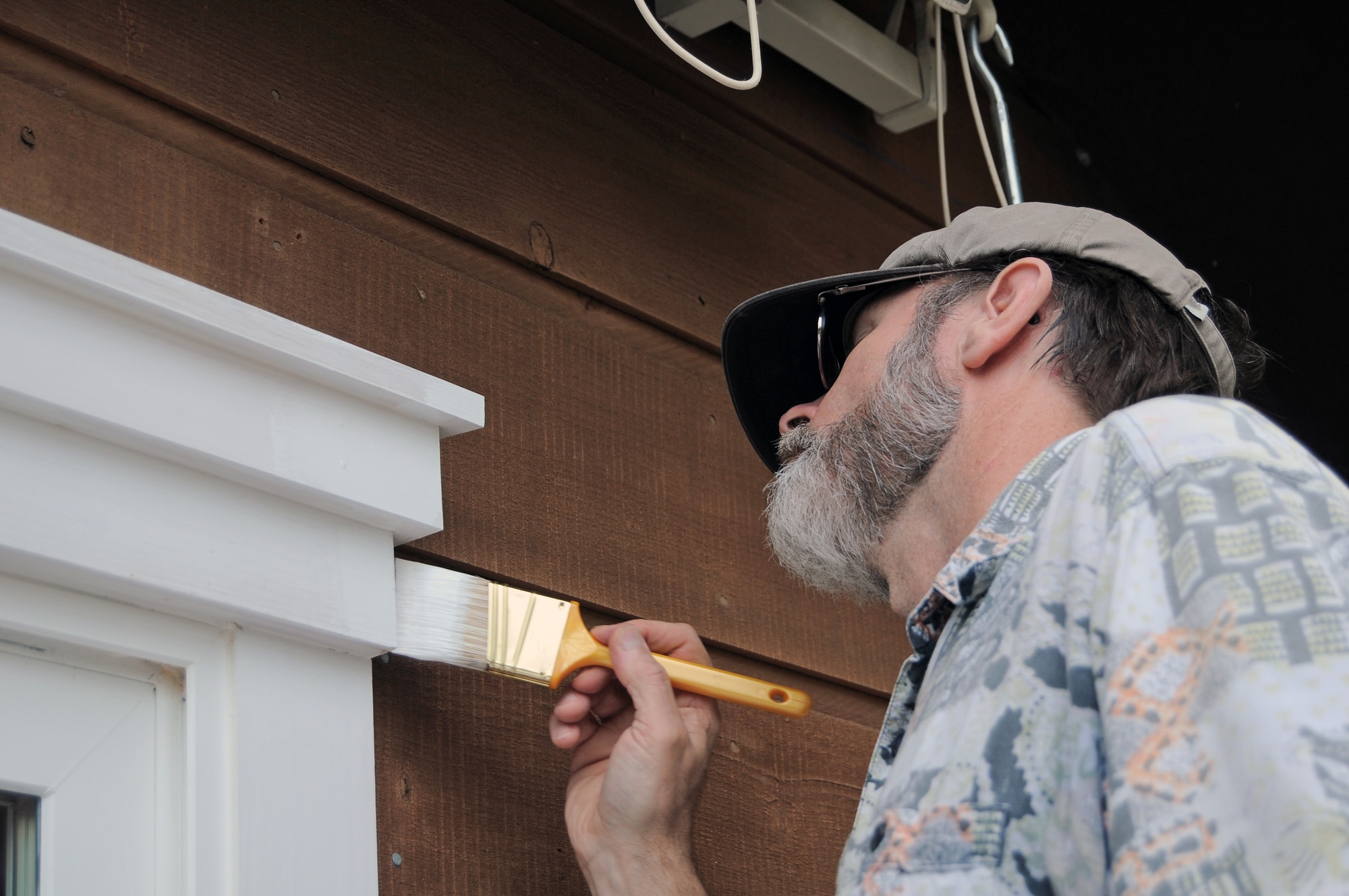
Ladders are the other real hazard on a raised or two-story house. If the work means long reaches from a ladder or a lot of old paint to remove, it’s a job to hand to a professional crew.
What kind of paint do you use on wood siding
The two main sources on this give slightly different answers, and it’s worth knowing both. A Purdue Extension publication co-written with the USDA Forest Products Laboratory, Selection and Application of Exterior Finishes for Wood, recommends two coats of good-quality acrylic latex house paint over a primer.
That same publication says oil-based or alkyd-based primers are best for woods with water-soluble extractives like redwood and cedar. For pine and similar woods, it says a high-quality acrylic latex can serve as both primer and topcoat.
The HDLC’s guidelines lean toward oil for historic exterior woodwork. They note that oil paint generally adheres better to problem surfaces, including old chalky paint, and that multiple layers of latex can form an impermeable moisture barrier, so they recommend oil-based paint on exterior woodwork.
What that means in practice
- Match the new coating to what’s already on the house, since compatibility decides adhesion.
- Use a primer and paint that are compatible, ideally from the same manufacturer, as the HDLC suggests.
- Put two topcoats over bare or repaired wood.
- Choose opaque paint for siding in HDLC districts, where the guidelines require exterior woodwork to be painted with opaque paint.
For more on product choices in this climate, see our guide to the best exterior paint for New Orleans homes.
Step 5: Paint in the right conditions
The HDLC suggests painting generally between 50 and 90 degrees Fahrenheit, within the humidity range the paint maker recommends, and out of direct sunlight. It also says to apply finish paint soon after an oil primer, since compounds that affect adhesion can form within 2 weeks.
The Purdue publication gives similar timing: the first topcoat within 2 weeks of priming and the second within 2 weeks of the first. It says latex paint needs a minimum of 50 degrees and the temperature shouldn’t drop below 50 for at least 2 hours after application.
It also puts a number on why two topcoats matter. A primer plus one topcoat should last 4 to 5 years, while two topcoats can last up to 10 years, according to the publication.
Is it cheaper to paint siding or replace it
In most cases, painting costs much less. HomeGuide’s wood siding cost guide puts installed wood siding at $5 to $15 per square foot, with removal of old siding adding $0.70 to $2.00 per square foot. The same guide puts exterior painting at $1.50 to $5.00 per square foot.
| Option | HomeGuide range per square foot | Best when |
|---|---|---|
| Repaint existing siding | $1.50 to $5.00 | Most boards are sound and rot is limited |
| Replace with new wood siding | $5 to $15 installed, plus $0.70 to $2.00 removal | Rot or damage is widespread |
These are national ranges, not local quotes. For numbers specific to this area, our post on the average cost to paint exterior surfaces in New Orleans breaks down siding, trim, shutters and doors.
In historic districts, replacement also has rules. The HDLC guidelines list replacing wood siding with vinyl or aluminum as work that goes to commission review, and they note that vinyl and aluminum don’t breathe and can trap moisture in the wall cavity.

Frequently asked questions
What kind of paint do you use on wood siding?
Purdue Extension and the USDA Forest Products Laboratory recommend two coats of good-quality acrylic latex house paint over a suitable primer, with oil or alkyd primers for cedar and redwood. The HDLC recommends oil-based paint on historic exterior woodwork, so match the system to what’s already on the house.
Is it cheaper to paint siding or replace it?
Usually painting is cheaper. HomeGuide puts exterior painting at $1.50 to $5.00 per square foot and installed wood siding at $5 to $15 per square foot, before removal of the old siding.
How often should wood siding be repainted?
The HDLC’s woodwork guidelines say exterior surfaces should generally be repainted every 5 to 8 years, with touch-ups on worn areas as needed. Needing paint much more often can signal moisture problems, poor prep or incompatible paint.
Do I need a lead-certified painter for an older house?
If the house was built before 1978 and you’re paying someone to disturb painted surfaces, the EPA’s RRP rule requires that firm to be certified in lead-safe practices. Check the EPA’s program page for the details that apply to your job.
Keep your older home protected
Older wood siding rewards patient prep and the right paint system. To have a crew assess your siding, handle repairs and repaint, see our exterior home painting service.
When you are ready, contact us for a free estimate or call (504) 608-5528.
Related reading
- Average Cost to Paint Exterior Surfaces in New Orleans
- The Best Exterior Paint for New Orleans Homes
- How to Find a Reliable House Painter in New Orleans
Sources
- City of New Orleans HDLC: Guidelines for Exterior Woodwork
- Purdue Extension and USDA Forest Products Laboratory: Selection and Application of Exterior Finishes for Wood
- U.S. EPA: Lead Renovation, Repair and Painting Program
- Sherwin-Williams: Exterior Troubleshooting FAQs
- Sherwin-Williams: Exterior Surface Preparation FAQs
- HomeGuide: Wood Siding Cost