
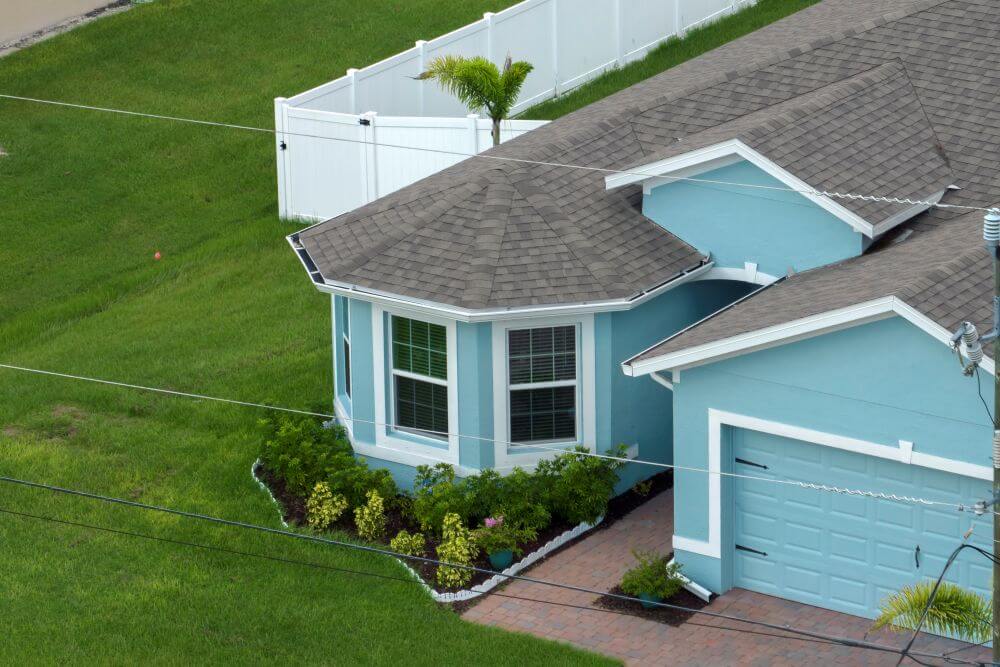
The right exterior paint for a New Orleans home is a premium 100 percent acrylic latex formulated with mildewcide and UV resistance, applied over a properly primed surface. Sherwin-Williams Emerald and Duration, and Benjamin Moore Aura, are the lines most often specified for Gulf Coast conditions. Oil-based exterior paint is the wrong choice here for almost every surface.
The climate decides the outcome, not preference. New Orleans takes 63.35 inches of rain a year, averages 76 percent relative humidity, and reaches a July average high of 91.4 degrees. A coating has to stay flexible through that, resist mold on its surface, and hold color under sustained UV. TurnKey Painter specifies for those numbers. To discuss your house, get in touch or call (504) 608-5528.
Key takeaways
- 100 percent acrylic latex is the standard. It stays flexible where oil-based coatings become brittle.
- Mildewcide is a functional requirement at 76 percent average humidity, not an upsell.
- UV resistance protects color on south and west elevations, which fail years before the rest.
- Primer on bare or weathered wood is what makes the topcoat last its rated life.
- Satin is the practical default for siding. Semi-gloss for trim, doors, and shutters.
What the climate actually demands
Four measured conditions set the specification, taken from the National Weather Service 1991 to 2020 climate normals.
Rainfall of 63.35 inches a year is on the 1991 to 2020 normals. Water lands on the building, runs down it, and sits in every horizontal joint. A coating that absorbs water swells, and a coating that swells eventually loses adhesion.
Relative humidity averages 76 percent, at 88 percent in the early morning. Surfaces stay damp long after rain stops, which is the condition mold needs.
The July average high is 91.4 degrees, and the annual mean is 70.5. Substrates expand in that heat and contract at night, and the coating has to move with them.
Sustained UV exposure. Color fades and binders degrade fastest on elevations that take direct afternoon sun.
A paint that handles all four is a premium product. Buying a budget exterior line to save on materials is a false economy when labor is the majority of the job cost, and a failed coating means paying that labor twice.
Acrylic, and why not oil?
Oil-based exterior paint was standard for generations and still has limited uses today. It is the wrong general choice here for three reasons.
- It becomes brittle. Oil films harden over time and crack when the substrate moves. In a climate with large daily temperature swings and high moisture, that movement is constant.
- It chalks and yellows under UV. Color retention on sun-facing walls is poor.
- It traps moisture. A less breathable film holds water in the substrate rather than letting it escape, which is how wood siding rots behind intact-looking paint.
A 100 percent acrylic latex stays flexible, breathes enough to release vapor, holds color under UV, and cleans up with water. The remaining legitimate use for oil-based product is a stain-blocking primer on tannin-rich woods or heavy stains, under an acrylic topcoat.
Products specified for Gulf Coast conditions
Several lines are consistently named for humid coastal climates:
| Product | Noted for |
|---|---|
| Sherwin-Williams Emerald Exterior Acrylic Latex | Extreme resistance to blistering and peeling |
| Sherwin-Williams Duration | Mould resistance, flexibility, weather tolerance |
| Benjamin Moore Aura | Mildew resistance and fade-resistant color |
| Behr Marquee | Adhesion and finish durability in harsh conditions |
| Zinsser Perma-White | Five-year mold and mildew warranty |
The common thread is a premium 100 percent acrylic engineered against moisture, mildew, and UV. Any of these will perform on a Gulf Coast home when it is applied correctly, and none of them will rescue a surface that was not prepared.
Sheen for exteriors
Exterior sheen choice runs on different logic from interiors. A higher sheen sheds water and dirt better but shows every imperfection in the substrate, which matters on old weatherboard.
| Sheen | Where it belongs | Trade-off |
|---|---|---|
| Flat | Rough masonry, stucco, heavily weathered siding | Hides flaws; holds dirt, harder to clean |
| Satin or low lustre | Siding, the practical default | Sheds water, still forgiving of surface texture |
| Semi-gloss | Trim, doors, shutters, railings | Durable and washable; highlights imperfections |
| Gloss | Front doors, ironwork | Hardest finish; unforgiving of prep |
The sheen step between siding and trim is also what makes a facade read properly. Satin walls against semi-gloss trim give the definition that a uniform sheen across everything loses.
The primer decides whether the topcoat performs
Exterior primer earns its place as the layer that bonds to the substrate so the topcoat can do its job. Treating it as a way to stretch the paint budget is how a decent topcoat gets wasted.
Prime in these cases:
- Bare wood, always. Weathered wood especially, because UV degrades the surface fibers, and paint applied directly bonds to a failing layer.
- Cedar and redwood should be treated with a stain-blocking primer. Tannins bleed through acrylic topcoats otherwise.
- Chalking surfaces. Rub a hand on the old paint; if it comes away powdery, a bonding primer is needed.
- Repairs and replacement boards. New material next to old absorbs differently.
- Rust on ironwork is common on local railings and balconies, and a rust-inhibiting primer is available.
Want the price measured rather than estimated? Request a free estimate or call (504) 608-5528 and we will walk the job with you.
Preparation, which is most of the job
On an older home, preparation is where the hours go and where the outcome is decided.
Wash and let it dry. Pressure washing removes chalk, dirt, and mildew spores. The surface then needs to dry fully, which in high humidity takes longer than expected. Painting a damp wall traps water under the film.
Scrape to sound material. Feathering the edges of remaining paint so the transition does not telegraph through the new finish.
Treat mildew rather than covering it. Mildew painted over grows through the new coating. It needs killing and removing first.
Caulk the joints that move. Areas around windows, doors, and where trim meets siding. This area is where water enters, and a flexible exterior sealant is the difference between a five-year job and a ten-year one.
Replace rotten wood. Paint does not consolidate rot. Sills, fascia, and the bottom courses of weatherboard are the usual casualties here.
Elastomeric coatings, and when they are wrong
Elastomeric coatings are thick, highly flexible films marketed for masonry and stucco in wet climates. On sound stucco with hairline cracking, they work well, bridging movement that ordinary paint cannot.
On wood siding they are usually a mistake. The film is nearly vapor-closed, so moisture entering the wood from behind cannot escape through it. In a climate with this much rain and humidity, the coating traps water against timber and accelerates the rot it was meant to prevent.
Matching the product to the substrate
New Orleans housing stock covers several exterior materials, and each changes the specification.
Wood weatherboard
It is the most common older substrate and the most demanding. It needs a breathable acrylic over a bonding or stain-blocking primer on bare areas. Never elastomeric. Expect the bottom courses and any south-facing elevation to need the most preparation.
All of these substrates are covered under exterior house painting, which is where surface type and preparation get priced together.
Fiber cement
Stable, dimensionally reliable, and forgiving. Factory-primed boards take acrylic directly. Cut ends from site work need priming before painting, and this is the step most often skipped.
Stucco and masonry
Stucco and masonry take flat or low-sheen acrylic masonry paint, or an elastomeric where hairline cracking needs bridging. Masonry must be fully cured before painting, and efflorescence needs removing rather than covering.
Brick
Painting brick is a decision that is difficult to reverse, so it deserves thought before the first coat. If it goes ahead, it needs a breathable masonry coating. A vapor-closed film on brick traps moisture in the wall and causes spalling in freeze conditions and salt damage in ours.
Ironwork, railings, and balconies
Apply a rust-inhibiting primer, followed by a direct-to-metal acrylic or an enamel rated for exterior metal. Local ironwork is often historic, and the existing coating may be lead-based, which brings its own requirements.
How long it should last
| Surface | Expected life, premium acrylic, prepared properly |
|---|---|
| Siding, north and east elevations | 8 to 12 years |
| Siding, south and west elevations | 5 to 8 years |
| Trim, fascia and soffits | 4 to 7 years |
| Doors and shutters | 4 to 6 years |
The section on what exterior surfaces cost to paint shows the cost to repaint each of those surfaces.
Budget products on unprepared surfaces can fail in two to three years. The difference between those outcomes is mostly preparation, then product, and only marginally colour.
Color is a performance decision here, not only an aesthetic one
Dark colors absorb more solar energy than light ones. On a wall facing west through a New Orleans August, that means a hotter substrate, more expansion and contraction, and faster binder degradation. Deep colors also carry less opacity, so they often need an extra coat, and they show fading sooner because there is more pigment to lose.
None of that makes dark colors wrong. Plenty of the city’s best facades are deep greens, charcoals, and near-blacks, and they hold up when the product is right. It does mean two things worth knowing before you choose:
- Specify a premium line with strong fade resistance if you want a deep color on a sun-facing elevation. This is where the difference between a budget and a premium product shows up soonest.
- Expect a shorter repaint interval on those elevations. Planning for it is better than being surprised by it.
Indoors the trade-offs run differently, and which interior paint suits this climate covers them.
Trim color is a smaller commitment than siding color and a good place to take a risk. It covers less area, costs less to redo, and carries most of the visual character of a facade.
Frequently asked questions
What type of paint is best for exterior houses in New Orleans?
A premium 100 percent acrylic latex with mildewcide and UV resistance. Satin for siding, semi-gloss for trim, doors, and shutters.
Is oil-based exterior paint ever the right choice?
Rarely, and mainly as a stain-blocking primer under an acrylic topcoat. As a finish coat, it becomes brittle, chalks under UV, and traps moisture in the substrate.
Do I need mildew-resistant exterior paint?
Yes. At 76 percent average humidity and 63.35 inches of annual rain, surface mold is routine. Premium exterior acrylics include mildewcide for this reason.
Should I use an elastomeric coating?
On sound stucco or masonry, it can be a good choice. On wood siding, it usually is not a suitable choice because it traps moisture against the timber.
Why do south-facing walls fail first?
Sustained UV degrades the binder and fades pigment fastest on elevations that take direct afternoon sun. Repainting those walls sooner than the rest is normal.
Specified for your house and its exposure
Product choice depends on the substrate, the elevation, the condition of the existing coating, and how much preparation the surface needs. TurnKey Painter specifies and applies across Metairie, Kenner, Slidell, Covington, Mandeville, Harahan, River Ridge, Gretna, LaPlace, St. Rose, Hammond, Madisonville, and Baton Rouge.
Call (504) 608-5528 or request a free estimate.
Related reading
Sources
- New Orleans climate normals 1991 to 2020: 63.35 inches annual precipitation, 70.5 degrees annual mean, 91.4 degrees July average high. National Weather Service, New Orleans and Baton Rouge. Accessed 2 September 2026.
- Relative humidity for New Orleans: 76 percent annual average, 88 percent morning, 61 percent afternoon. World Data Center for Meteorology, Climate of the World, 1961 to 1990, via Current Results. Accessed 2 September 2026.
- Exterior paint guidance for Gulf Coast and humid climates, including Sherwin-Williams Emerald and Duration, Benjamin Moore Aura, Behr Marquee, and Zinsser Perma-White. Pro 1 Painters, Best Exterior Paint for Gulf Coast Homes and CompositePaint, Best Paint for Humid Climates 2026. Accessed 2 September 2026.
This article is general information about exterior paint selection. It is not a specification for your property. Product suitability depends on substrate, exposure and existing condition. Product names are referenced for information and do not imply endorsement or affiliation.