
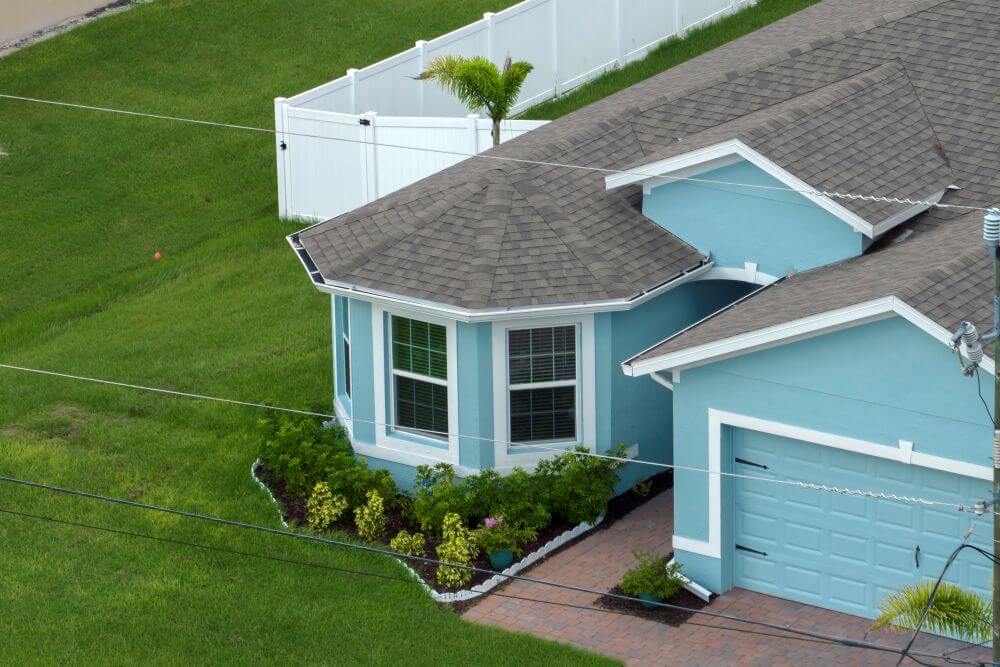
Mildew on house siding is a fungus growing on the surface, and in a warm, humid place it’s one of the most common reasons a painted house looks dingy. The USDA Forest Products Laboratory’s Wood Handbook chapter on finishing calls it probably the most common complaint about finishes after peeling and flaking.
The fix before painting is a thorough wash with a mildew cleaner or a dilute bleach solution, a clean rinse and full drying time, followed by a paint that contains a mildewcide. If the paint underneath is still sound, washing alone may be all the house needs.
If your siding is streaked with black or green and you’re not sure whether it needs cleaning or repainting, TurnKey Painter can take a look. Request a free estimate or call (504) 608-5528.
Key takeaways
- A drop of household bleach tells mildew from dirt: mildew usually lightens within seconds to a couple of minutes, and dirt doesn’t.
- The Wood Handbook recommends one part bleach to three to five parts water, plus a little powdered detergent.
- Never mix bleach with ammonia or with cleaners that contain it.
- Painting over mildew hurts adhesion, so siding has to be cleaned, rinsed and dried first.
- Paint with a mildewcide, better airflow and fewer damp spots slow mildew down, though it can return on any paint.
Why mildew grows on siding here
Mildew needs moisture, shade and still air, and a humid climate supplies plenty of the first. Purdue Extension’s bulletin on house paint discoloration says mildew grows best in warm, humid climates, especially on walls behind trees or shrubs where air movement is restricted.
The Wood Handbook adds that mildew is most common where moisture stays longest, out of the sun and where air doesn’t move. It also follows dew patterns, showing up on eaves, soffits and porch ceilings that cool quickly and collect condensation.
The spots to check first
- North-facing and heavily shaded walls
- Siding behind shrubs, trees and vines
- Eaves, soffits, porch ceilings and carport ceilings
- Areas under leaking or overflowing gutters
- Lower courses of siding that stay damp after rain and sprinklers
Mildew can also feed on dirt and some natural oils in finishes, according to the handbook. That’s one reason dirty siding tends to grow it faster than clean siding.
Is it mildew or just dirt
Both look like gray or black discoloration, so test before you clean. Purdue and the Wood Handbook both recommend putting a drop or two of household bleach on the stain. Mildew usually bleaches out within seconds to a couple of minutes, while dirt, iron stains and extractive bleeding stay put.
The handbook notes that mildew often grows alongside algae, which usually shows up green. Sherwin-Williams’ mildew removal guide describes the same bleach test for homeowners.
Stains that look like mildew but aren’t
If the bleach test doesn’t lighten the spot, one of these is the more likely cause. Each needs a different fix, and scrubbing harder with bleach won’t help.
- Iron stains. The Wood Handbook says iron fasteners reacting with tannins in wood leave black stains, which is common on cedar and redwood with plain steel or poor galvanized nails.
- Rust streaks. Purdue recommends corrosion-resistant nails, such as galvanized, stainless steel or aluminum, to avoid red-brown discoloration.
- Extractive bleeding. Purdue describes a reddish-brown stain left when water dissolves natural chemicals from heartwood and then evaporates.
- Blue stain. The handbook notes this fungus discolors sapwood before it’s dried, and neither mildew cleaners nor bleach remove it, so a pigmented finish is the usual cover.

What to spray on siding to remove mildew
You don’t need anything exotic. The sources below agree on a few options, and each has its tradeoffs.
| Cleaner | Typical mix | Notes |
|---|---|---|
| Dilute household bleach, Wood Handbook version | 1 part bleach to 3 to 5 parts warm water, about 1/4 cup powdered detergent per batch | Use as dilute as works. The handbook says no mix stronger than 1 to 3 should be needed |
| Dilute household bleach, Purdue version | 1 quart bleach, 3 quarts warm water, 1/3 cup household detergent | Scrub, then rinse thoroughly with fresh water |
| Dilute household bleach, Sherwin-Williams version | 1 part bleach to 3 parts water | Apply, scrub, let sit 10 minutes, rinse and let dry before painting |
| Oxygen bleach | Per product label | The handbook says it’s likely to do less damage to wood than chlorine bleach |
| White vinegar | Sprayed directly | Sherwin-Williams suggests letting it sit about an hour before scrubbing and rinsing |
| Commercial mildew cleaner | Per product label | Both Purdue and the handbook list these as an option |
Safety with bleach solutions
- Never add ammonia. The handbook warns that bleach and ammonia form a toxic combination, and many household cleaners contain ammonia.
- Use powdered detergent, not liquid. The handbook says liquid detergents may contain ingredients that react with bleach.
- Protect yourself. Sherwin-Williams recommends protective eyewear, clothing and waterproof gloves when working with bleach.
- Protect plants. The handbook advises avoiding splashes on yourself or your landscaping, so wet plants down and cover what you can.
- Test color first. Sherwin-Williams notes bleach can damage color, so try a hidden spot before doing a whole wall.
How to wash mildew off siding before painting
This is the sequence a careful crew follows. It takes time, but paint applied over leftover mildew or cleaning residue won’t bond well.
- Test the stains. Use the bleach drop test to confirm what you’re dealing with.
- Mix the solution. Start with the most dilute bleach mix that works, or a commercial cleaner.
- Apply and scrub gently. The handbook recommends a bristle brush or sponge rather than aggressive scraping.
- Let it work. Sherwin-Williams suggests about 10 minutes of contact time for its bleach mix.
- Rinse thoroughly. Use a garden hose with the stream pointed down so water doesn’t flood behind the siding.
- Let everything dry. Sherwin-Williams says to let the surface dry before painting.
- Paint soon after. The handbook says to refinish the cleaned surface as soon as it’s dry, using a finish that contains a mildewcide.
A word on pressure washing
A pressure washer is tempting, but high pressure can do real damage. The Wood Handbook says that if you use one, keep the pressure low to avoid damaging the wood and keep the stream pointed down, the same as with a garden hose.
Driving water behind siding or into window frames creates the moisture problems that cause paint to blister later. On two-story walls, the job also means working from a ladder with a wet, slippery surface, and OSHA’s extension ladder fact sheet stresses three points of contact and keeping ladders free of slippery materials. For upper stories, hiring a professional is the safer call.
Why you can’t just paint over mildew
Fresh paint doesn’t bond well to a mildewed surface. The Wood Handbook says mildew’s spores and growth interfere with the adhesion of coatings applied over them. It also notes mildew can puncture microscopic holes in a coating, which breaks the water barrier the paint is supposed to provide.
Purdue’s advice is to repaint cleaned surfaces with a paint containing a mildewcide before the mildew has a chance to return. Our exterior home painting service starts with this kind of cleaning, along with scraping loose paint and minor repairs.
When washing is enough
Not every mildewed house needs paint. The handbook says that if paint is sound but discolored by mildew, it should be washed, and it doesn’t need repainting. Save the repaint for when you also see peeling, cracking or worn-through topcoats.
It’s also worth knowing that repainting too often has its own cost. The handbook warns that too many coats of latex paint can eventually lead the primer to lose adhesion, so a wash that buys a few more years is often the smarter move.
How to keep mildew from coming back
You can slow it down a lot, though you can’t make a house permanently mildew-proof. Sherwin-Williams’ exterior troubleshooting guide says paints can be formulated to inhibit mildew, but under some conditions it will eventually reappear on any type of paint.
- Choose paint with mildewcide. Purdue notes that paints containing zinc oxide and a mildewcide resist mildew better. Benjamin Moore’s Element Guard data sheet lists a passing result on the ASTM D3273 and D3274 mildew resistance tests.
- Open up airflow. Trim shrubs and branches back from the walls so siding can dry.
- Fix water sources. Clean gutters, redirect sprinklers and repair leaks that keep siding wet.
- Wash on a schedule. Light cleaning before mildew builds up keeps it from feeding on dirt.
- Watch dew-prone areas. Porch ceilings and soffits need attention sooner than open walls.
For more on picking a paint that stands up to our humidity, read our guide to the best exterior paint for New Orleans homes.
Frequently asked questions
What can I spray on my siding to remove mildew?
A dilute household bleach solution is the standard choice, such as one part bleach to three to five parts warm water with a little powdered detergent, as the USDA Wood Handbook recommends. Commercial mildew cleaners and oxygen bleach also work, and Sherwin-Williams suggests white vinegar as a gentler option on some surfaces. Never mix bleach with ammonia, protect nearby plants, and rinse the siding thoroughly afterward.
How do I know if it’s mildew or dirt on my siding?
Put a drop or two of household bleach on the dark spot. Mildew usually bleaches out within seconds to a couple of minutes, while dirt stays the same color, according to Purdue Extension and the Wood Handbook.
Can you paint over mildew on siding?
No, it should be cleaned off first. The USDA Wood Handbook says mildew interferes with the adhesion of coatings applied over it, so paint over mildew is more likely to fail. Wash with a mildew cleaner or dilute bleach, rinse, let the siding dry, and then paint with a product that contains a mildewcide.
Should I pressure wash mildew off my house?
If you use a pressure washer, keep the pressure low and point the stream downward, as the Wood Handbook advises, so you don’t damage wood or force water behind the siding. A cleaning solution, a soft brush and a garden hose rinse often do the job with less risk. Upper stories are best left to a professional with proper ladder or lift equipment.
Get your siding cleaned up and repainted right
Good cleaning is the step that makes a new paint job last, and it’s part of every exterior we prep. Call (504) 608-5528 or contact us online for a free estimate.
Related reading
- The Best Exterior Paint for New Orleans Homes
- Average Cost to Paint Exterior Surfaces in New Orleans
Sources
- USDA Forest Products Laboratory: Wood Handbook, Chapter 16, Finishing Wood
- Purdue Extension: Discoloration of House Paint, Causes and Cures (NCR-134)
- Sherwin-Williams: How to Remove Mildew
- Sherwin-Williams: Exterior Troubleshooting FAQs
- Benjamin Moore: Element Guard Exterior Low Lustre Finish 764 Technical Data Sheet
- OSHA: Reducing Falls in Construction, Safe Use of Extension Ladders