

Most modern exterior latex paints need somewhere between 30 minutes and a few hours before rain, depending on the product, the temperature and the humidity. Benjamin Moore’s Element Guard technical data sheet says it resists rain as soon as 60 minutes after application on wood or primed surfaces at 77°F and 50% humidity, and Sherwin-Williams tells painters not to use its Latitude paint if rain is expected within 30 minutes.
Those are best-case numbers from lab conditions. On a sticky New Orleans afternoon, drying takes longer, so the safer plan is to finish each wall with a few hours of dry weather ahead of it.
Afternoon storms are a big part of how TurnKey Painter schedules exterior jobs. If you’d like us to take a look at your house, request a free estimate or call (504) 608-5528.
Key takeaways
- Rain-ready times on current exterior paints run from about 30 minutes to 1 hour under ideal lab conditions.
- Those times are measured around 77°F and 50% humidity. High humidity and cool temperatures stretch them.
- Touch dry, rain resistant and fully cured are three different stages, and only the first two happen the same day.
- Rain on fresh latex can leave streaks, soapy residue or loss of gloss, and most of it can be rinsed or touched up once dry.
- Summer in New Orleans brings frequent afternoon thunderstorms, so exterior painting works best in the morning and early afternoon.
Dry to the touch, rain ready and cured are different things
Paint labels list several times, and mixing them up is how people get caught by a storm. Here’s what each one means.
- Dry to the touch. The surface no longer feels wet. Benjamin Moore’s Element Guard lists 1 hour, and Sherwin-Williams’ Latitude lists 2 hours.
- Rain resistant. The film has set enough that rain won’t wash it off or mark it. Some products publish this separately and some don’t.
- Ready to recoat. Both products list 4 hours in normal conditions.
- Cured. The film has reached its full hardness. Benjamin Moore says painted surfaces can be washed after two weeks.
What two current paint labels say
| Product | Rain guidance | Dry to touch | Recoat | Test conditions |
|---|---|---|---|---|
| Benjamin Moore Element Guard Low Lustre | Resists rain as soon as 60 minutes after application on wood, primed or painted surfaces | 1 hour | 4 hours | 77°F, 50% relative humidity |
| Sherwin-Williams Latitude Exterior Acrylic Satin | Avoid using if rain is expected within 30 minutes | 2 hours | 4 hours above 45°F, 24 to 48 hours at 35°F to 45°F | 50% relative humidity |
The Element Guard technical data sheet adds that surfaces like hardboard or vinyl may need longer, and that high humidity and cool temperatures lengthen dry, recoat and service times. The Latitude product data sheet says the same about temperature, humidity and film thickness.
Both are paints marketed for early moisture resistance. Other products can list very different times, so the label on the can you’re using is the one to follow.
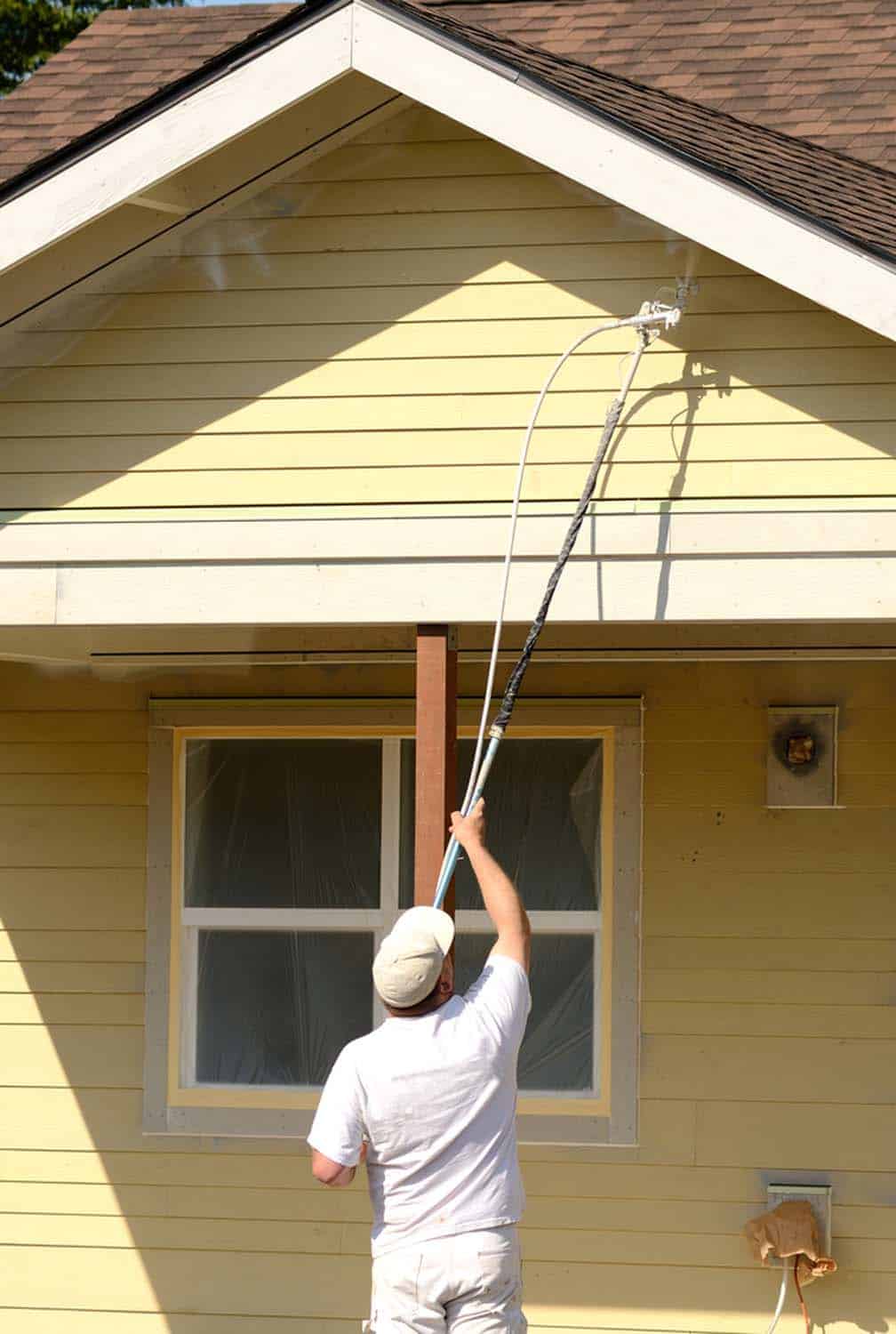
Why humid weather slows the clock
Latex paint dries as its water evaporates, and damp air slows evaporation. Every dry time on a data sheet assumes 50% relative humidity, but NOAA’s Local Climatological Data summary for New Orleans International Airport shows average humidity around 59% to 66% at noon and 64% to 75% at 6 p.m., depending on the month.
Temperature matters too. Purdue Extension advises that the temperature shouldn’t drop below 50°F for at least 2 hours after latex paint goes on, and the USDA Forest Products Laboratory’s Wood Handbook recommends 50°F or warmer for 24 hours unless the manufacturer allows lower.
Film thickness matters as well, and the Latitude data sheet lists it alongside temperature and humidity as a factor in drying time. That means a wall rolled on too thick may still be soft when a storm arrives, even if a thinner wall nearby is fine.
Afternoon storms in New Orleans
The National Park Service’s weather page for Jean Lafitte National Historical Park and Preserve describes spring here as a season of frequent afternoon thunderstorms and summer as a time of intense but brief tropical downpours. NOAA’s long-term averages for the airport count about 16 thunderstorm days in July and about 14 in August, compared with about 2 in October.
That rhythm shapes a summer painting day. The window between morning dew drying off and afternoon storms building can be short, and it’s often narrower than the paint label assumes.
What happens if it rains right after you paint
How much damage you see depends on how far the paint had set. A light shower on paint that’s been drying for a couple of hours may leave nothing at all. A downpour on paint that went on 20 minutes ago is a different story.
- Surfactant streaks. Sherwin-Williams describes surfactant leaching as tan, brown or clear spots and streaks that can feel soapy or sticky, with moisture as the number one cause.
- Wrinkling, fading and dull patches. The Wood Handbook says water soaking into partly formed latex can cause wrinkling, fading, loss of gloss and streaking.
- Bubbles. Benjamin Moore’s exterior temperature guide says bubbles from rain on fresh paint should be left alone at first, since they may resolve as the water evaporates.
- Washed-off paint. Very fresh paint can run, drip onto trim or leave thin, uneven coverage.
What to do after a storm hits fresh paint
- Leave it alone while it’s wet. Wiping or rolling over damp paint makes the damage worse.
- Let it dry fully. Benjamin Moore advises waiting until surfaces are completely dry before painting again.
- Inspect the next day. Look for streaks, dull spots, runs and blisters in good light.
- Rinse off surfactant residue. Sherwin-Williams recommends flushing exterior stains with clean water before they set, or scrubbing with a soft brush.
- Repair damaged spots. For blisters or washed-out areas, Sherwin-Williams’ guide to fixing paint blistering says to let the paint dry, sand the area smooth, clean it and reapply.
- Recoat if needed. Once repairs are dry, a fresh coat over the affected wall usually evens out the finish.
Surfaces that need more time before rain
A rain-ready time printed on a label describes a coat on a typical vertical wall. Some parts of a house take longer, and they’re worth painting earlier in the day.
- Hardboard and vinyl siding. Benjamin Moore’s data sheet specifically notes these may need a longer dry time than wood or primed surfaces before rain.
- Window sills and flat trim. Sherwin-Williams’ exterior troubleshooting guide lists window sills as a common peeling spot and recommends caulking the joints and keeping storm window drain holes open.
- Fresh caulk. The same guide says high humidity, joints wider than 1/2 inch and temperatures below 40°F slow caulk drying, and paint over wet caulk can crack.
- Shaded walls. The Wood Handbook notes moisture stays longest on surfaces out of the sun and where air doesn’t move, so those walls dry slower on both sides of a storm.
Evening dew can act like a light rain
Rain isn’t the only water that lands on fresh paint. Sherwin-Williams explains that in spring and fall, dew forms on surfaces warmed by the sun during the day and then cooled quickly after sunset. The Wood Handbook advises against painting late in the afternoon when heavy dew is expected overnight, for the same reasons as rain.
How to plan a painting day around rain
Good crews don’t try to outrun a storm. They set up the day so the newest paint always has time before the weather turns.
- Check the hourly forecast and radar before starting, not just the daily rain chance.
- Start once morning dew has dried, and paint the sides that will get the most drying time first.
- Leave several hours of dry weather after the last coat of the day, more on humid or cool days.
- Use a product with published early rain resistance when afternoon storms are likely.
- Keep plastic and drop cloths handy to protect doors, trim and freshly painted railings.
- Stop early rather than rolling one more wall into an incoming storm.
If you have more questions about how scheduling and weather days work, our painting FAQs cover common ones. For the full process on an exterior job, see our exterior home painting page, and for paint choices that hold up here, read the best exterior paint for New Orleans homes.
Frequently asked questions
What happens if it rains after you paint?
It depends on how long the paint had to set, since rain on very fresh latex can cause runs, surfactant streaks that feel soapy or sticky, wrinkling, fading and dull patches. Paint that has reached its rain-ready time, often 30 to 60 minutes for current moisture-resistant products under ideal conditions, usually comes through a shower fine. Most damage can be rinsed off or sanded and touched up once the paint is dry.
Will exterior paint dry in 2 hours?
It can be dry to the touch in 1 to 2 hours on many current exterior latex paints at about 77°F and 50% humidity, based on Benjamin Moore and Sherwin-Williams data sheets. That isn’t the same as being ready to recoat, which both list at about 4 hours, or fully cured, which takes much longer. Humid or cool weather stretches every one of those times.
How long should exterior paint dry before rain in humid weather?
Plan on longer than the label’s rain-ready time, since those numbers are measured at 50% relative humidity. Benjamin Moore’s data sheet says high humidity and cool temperatures extend dry and recoat times. On a humid day, give the last coat several hours before rain if you can.
Can you paint the day after it rains?
Yes, once the surface is completely dry. Benjamin Moore advises waiting until surfaces are fully dry after rain, and the surface also needs to be more than 5°F above the dew point. Shaded walls and wood that soaked up water may need longer than sunny siding.
Keep your paint job on schedule
A crew that plans around afternoon storms saves you touch-ups and repaints. Call (504) 608-5528 or contact us online to set up a free estimate for your exterior.
Related reading
- The Best Exterior Paint for New Orleans Homes
- Average Cost to Paint Exterior Surfaces in New Orleans
Sources
- Benjamin Moore: Element Guard Exterior Low Lustre Finish 764 Technical Data Sheet
- Sherwin-Williams: Latitude Exterior Acrylic Satin Product Data Sheet
- NOAA NCEI: 2023 Local Climatological Data, New Orleans (KMSY)
- Purdue Extension: Selection and Application of Exterior Finishes for Wood (NCR-135)
- USDA Forest Products Laboratory: Wood Handbook, Chapter 16, Finishing Wood
- National Park Service: Jean Lafitte National Historical Park and Preserve Weather
- Sherwin-Williams: How to Fix Surfactant Leaching
- Benjamin Moore: Temperature Guide for Exterior Painting
- Sherwin-Williams: Exterior Troubleshooting FAQs
- Sherwin-Williams: How to Fix Paint Blistering