
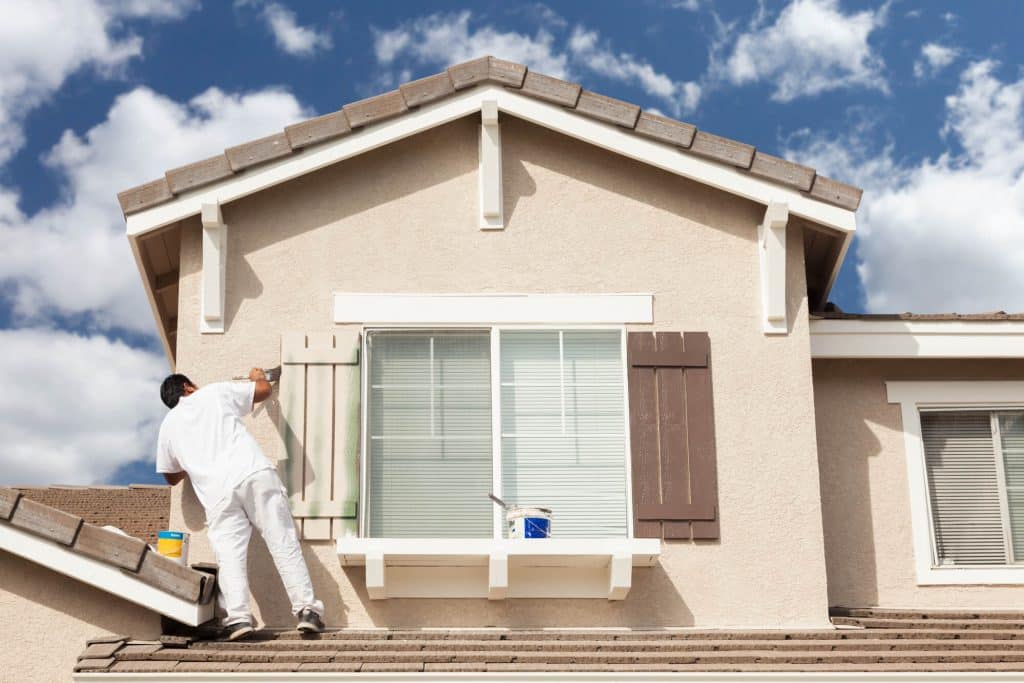
In New Orleans, the best time to paint a house exterior is usually October and November, with March through May close behind. Those months pair mild temperatures with fewer thunderstorms, and October is the driest month of the year in the National Weather Service’s 1991 to 2020 climate normals for the airport.
Summer and winter jobs can still turn out well, but they take tighter scheduling around heat, afternoon storms, cool nights and dew. The weather on the day the paint goes on, and the night after, matters as much as the month.
If you’re weighing when to book, TurnKey Painter can look at your house and talk through timing with you. Reach out for a free estimate or call (504) 608-5528.
Key takeaways
- October has the lowest normal rainfall of any month at the airport, 3.70 inches, and highs around 81°F.
- March through May brings mild weather, but cool spring nights mean dew, so painting stops earlier in the day.
- June through August averages 18 to 23 days a month at 90°F or hotter, plus frequent afternoon thunderstorms.
- Latex paint generally needs about 50°F or warmer during and after application, unless the label allows lower.
- Benjamin Moore advises painting only when the surface is more than 5°F above the dew point.
New Orleans weather by month for exterior painting
This table pulls from NOAA’s Local Climatological Data summary for New Orleans International Airport, which lists 30-year normals alongside long-term thunderstorm averages. Your own neighborhood can run a few degrees different, but the pattern holds across the area.
| Month | Normal high | Normal low | Normal rain | Days 90°F or hotter | Avg thunderstorm days |
|---|---|---|---|---|---|
| January | 62.5°F | 46.1°F | 5.18 in | 0 | 2.1 |
| February | 66.4°F | 49.7°F | 4.13 in | 0 | 2.8 |
| March | 72.3°F | 55.3°F | 4.36 in | 0 | 3.9 |
| April | 78.5°F | 61.7°F | 5.22 in | 0.2 | 4.6 |
| May | 85.3°F | 69.0°F | 5.64 in | 5.9 | 6.3 |
| June | 90.0°F | 74.7°F | 7.62 in | 18.4 | 10.9 |
| July | 91.4°F | 76.5°F | 6.79 in | 22.9 | 15.9 |
| August | 91.3°F | 76.6°F | 6.91 in | 23.0 | 13.5 |
| September | 88.1°F | 73.5°F | 5.11 in | 12.8 | 6.8 |
| October | 80.6°F | 64.3°F | 3.70 in | 2.0 | 2.2 |
| November | 71.2°F | 53.7°F | 3.87 in | 0 | 2.2 |
| December | 64.8°F | 48.4°F | 4.82 in | 0 | 2.2 |
Two months stand out. October and November have the lowest normal rainfall, the fewest days with measurable rain at about 7 each, and very few storms. They also avoid the long stretch of 90-degree days that runs from June into September.
What paint needs from the weather
As latex paint dries, its resin has to fuse into a continuous film, which the Forest Products Laboratory describes as coalescing. Too cold, too wet or too hot, and that film can come out weak, streaky or blistered. Here’s what the manufacturers and researchers say to watch.
- Air and surface temperature. Benjamin Moore’s exterior temperature guide recommends planning projects for 35°F to 100°F, with 77°F as ideal, and says each product’s own label sets its exact range.
- Staying warm after application. The USDA Forest Products Laboratory’s Wood Handbook chapter on finishing says to apply latex at 50°F or warmer and expect it to stay above that for 24 hours, unless the manufacturer allows lower.
- Dew point. Benjamin Moore says the surface should be more than 5°F above the dew point. The handbook adds that the dew point is a good estimate of the nighttime low.
- Rain. Benjamin Moore advises avoiding rainy conditions and stopping as soon as rain starts, then waiting until surfaces are completely dry.
- Direct sun. Surfaces in full sun can run much hotter than the air, which is why Benjamin Moore suggests checking them with an infrared thermometer.
Season by season in New Orleans
Fall: the most reliable window
October averages highs of 80.6°F and lows of 64.3°F, with 3.70 inches of rain. November cools to highs near 71°F and lows near 54°F, still comfortably above the 50°F threshold most latex paints need during the day.
There’s one caution for early fall. The National Hurricane Center’s tropical cyclone climatology notes that the Atlantic season runs June 1 to November 30, peaks around September 10, and sees most of its activity from mid-August to mid-October. A good contractor keeps an eye on the tropics before committing a crew to a multi-day job in late September or early October.
November’s cooler nights bring more dew. Crews usually start after the morning moisture has dried off and wrap up early enough for the paint to set before evening.
Spring: good weather, watch the evenings
March through May is the other strong stretch. March lows average 55.3°F and April lows average 61.7°F, and heat only starts building in May, which averages about 6 days at 90°F or hotter.
The catch is dew. Purdue Extension warns against painting in the evenings of cool spring and fall days when heavy dew forms, and Sherwin-Williams notes in its exterior troubleshooting guide that spring and fall temperatures can drop sharply within the first 24 to 48 hours after painting.
Summer: possible, with an early start
June, July and August each average 18 to 23 days at 90°F or hotter, and July averages almost 16 thunderstorm days. Mean dew points in July and August sit above 75°F, according to the same NOAA summary.
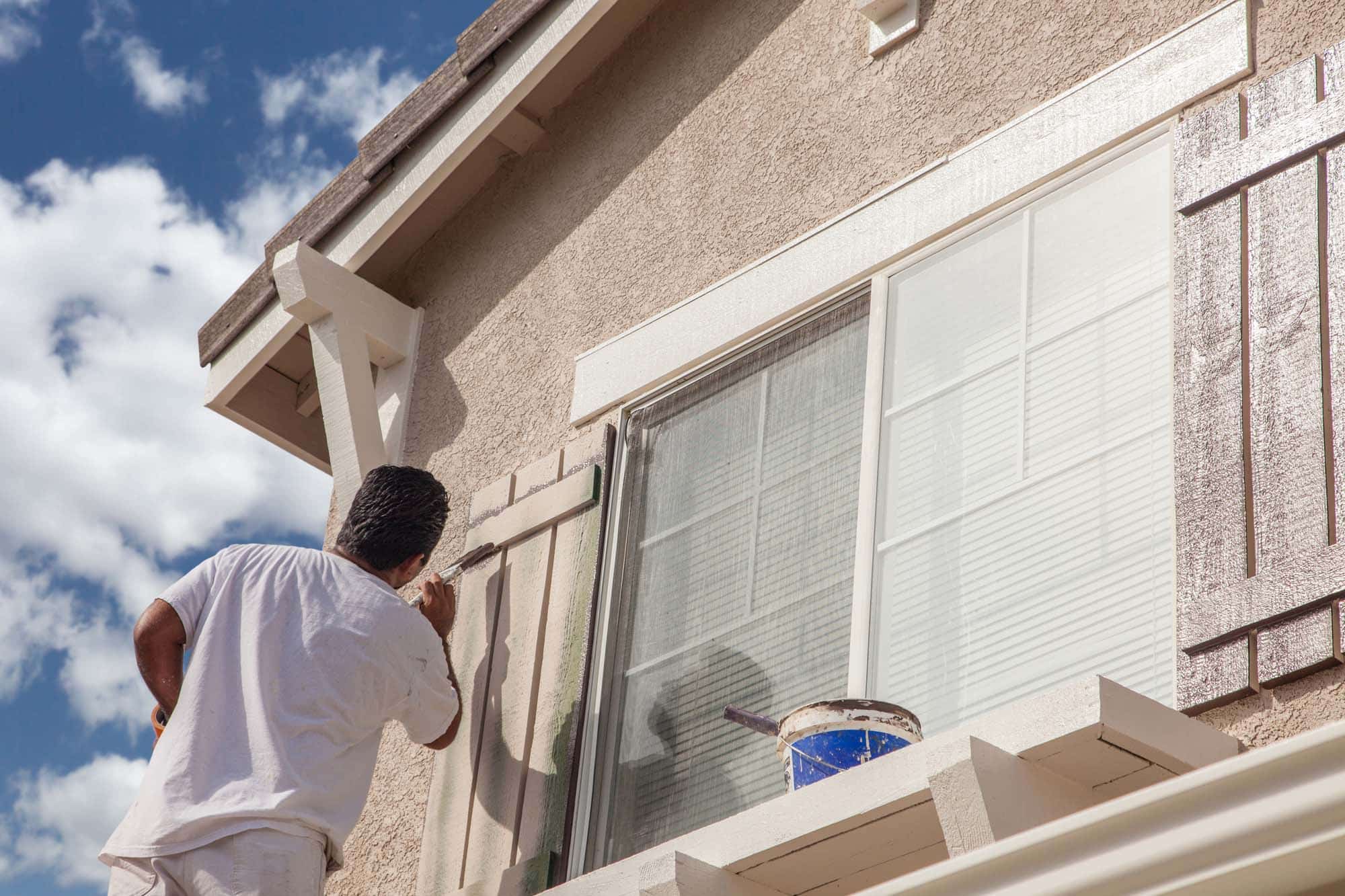
Summer jobs work when the crew starts early, follows the shade around the house and packs up before the afternoon storms roll in. Sherwin-Williams links surfactant leaching, a sticky, streaky residue on fresh latex, to hot, humid days followed by much cooler evenings, so a sudden evening storm on fresh paint is worth planning around.
Winter: short days and cold snaps
December through February averages lows between 46°F and 50°F, and January averages about 3 nights at or below freezing. Many days warm up enough to paint, but the window between morning dew and evening chill is short.
Some products are rated for lower temperatures. Benjamin Moore’s guide notes that its product specs vary, so the label or technical data sheet decides what’s allowed on a cool day.
Each side of the house keeps its own schedule
The month sets the general conditions, but each wall has its own microclimate. The Forest Products Laboratory notes that moisture stays longest on surfaces out of the sun and where air doesn’t move, so shaded walls and areas behind shrubs dry out later in the morning than open ones.
South and west walls take the most sun, and the handbook recommends two topcoats on those fully exposed sides. A crew that plans each elevation around its own sun and shade can keep working on days when one side of the house isn’t ready yet.
When you should hold off on exterior painting
Even in October, some days are wrong for painting. A careful crew will pause or reschedule when any of these apply.
- Rain is falling, is forecast before the paint can set, or the siding is still wet from the last storm.
- The surface is within 5°F of the dew point, which is common on humid mornings.
- The air or surface temperature is below the minimum on the paint label, or will drop below it overnight.
- It’s late afternoon on a cool day and heavy dew is expected. The handbook warns that water soaking into partly formed latex can cause wrinkling, fading, gloss loss and streaking.
- A dark wall is baking in full midday sun and reads hotter than the product allows.
- Fresh caulk hasn’t cured. Sherwin-Williams says painting over partly dried caulk can crack, and that high humidity, wide joints and temperatures below 40°F all slow caulk drying.
How a pro schedules an exterior job here
Good timing comes down to a few habits that protect the paint from the moment it goes on until it has had a night to set.
- Check the forecast for the full job. Look at rain chances, overnight lows and dew points, not just the daytime high.
- Start after the dew burns off. Wait until the siding is dry to the touch before the first coat goes on.
- Follow the shade. Paint each side after the sun has moved off it, so the surface stays within the label’s range.
- Measure the surface, not just the air. An infrared thermometer settles the question in seconds.
- Stop early on cool days. Give the paint time to set before evening dew forms.
- Keep coats on schedule. Purdue advises applying the first topcoat within 2 weeks of the primer and the second within 2 weeks of the first.
- Build in weather days. A schedule with no slack pushes crews to paint on days they shouldn’t.
For a sense of what goes into pricing, see our guide to the average cost to paint exterior surfaces in New Orleans, and for how we run a full job, visit our exterior home painting page.
Frequently asked questions
Is October too late to paint outside?
Not in New Orleans. October is one of the best months here, with normal highs of 80.6°F, lows of 64.3°F and the lowest normal rainfall of the year at the airport, 3.70 inches. The main things to watch in early October are late-season tropical systems and dew on cooler evenings.
When should you not do exterior painting?
Skip it when rain is expected before the paint sets, when the surface is wet, or when the surface is within 5°F of the dew point. Also hold off when temperatures are below the paint label’s minimum or will fall below it overnight, and late on cool afternoons when heavy dew is likely. Most latex paints need about 50°F or warmer for 24 hours unless the manufacturer allows lower.
What is the best month to paint a house in New Orleans?
October is usually the strongest single month, followed closely by November and then March through May. October combines the lowest normal rainfall, few thunderstorm days and highs around 81°F. Spring works well too, as long as crews stop early enough to beat evening dew.
Can you paint a house exterior in a New Orleans summer?
Yes, with planning. June through August averages 18 to 23 days a month at 90°F or hotter and frequent afternoon thunderstorms, so crews start early, work in the shade and stop before storms arrive. Checking surface temperature against the paint label matters most in summer, because walls in full sun run much hotter than the air.
Plan your exterior paint job with us
The right month helps, but the right daily schedule is what protects your investment. Call (504) 608-5528 or contact us online for a free estimate, and we’ll talk through timing that suits your house and your calendar.
Related reading
- The Best Exterior Paint for New Orleans Homes
- Average Cost to Paint Exterior Surfaces in New Orleans
Sources
- National Weather Service New Orleans/Baton Rouge: 1991 to 2020 Climate Normals
- NOAA NCEI: 2023 Local Climatological Data, New Orleans (KMSY)
- Benjamin Moore: Temperature Guide for Exterior Painting
- USDA Forest Products Laboratory: Wood Handbook, Chapter 16, Finishing Wood
- Purdue Extension: Selection and Application of Exterior Finishes for Wood (NCR-135)
- Sherwin-Williams: Exterior Troubleshooting FAQs
- NOAA National Hurricane Center: Tropical Cyclone Climatology